

Cold Weather Running Gear: 2026 Beginner's Guide! ❄️
Did you know that 65% of runners now lace up primarily for mental health and stress relief, even when the frost starts to bite? It is a powerful motivator, but the fear of getting sick or feeling frozen can keep many beginners stuck on the couch. If you are feeling overwhelmed by technical terms or worried about the cost of a winter wardrobe, take a deep breath. Finding the right cold weather running gear for beginners doesn't have to be a complicated or expensive mission! ❄️
We agree that staring at a sub-zero forecast is intimidating when you are just starting out. That is why we have built this guide to turn that icy "no way" into an enthusiastic "let's go!" You will discover how to stay warm, dry, and totally motivated with our ultimate beginner-friendly winter running gear list. We are sharing a simple shopping list, essential tips for staying comfortable in the wind, and the confidence you need to crush your miles. From protecting your ears with specialized gel earmuffs to keeping your devices ready for winter race weekends, we have got your back! 🏃♂️✨
Key Takeaways
- Master the simple 3-layer system to keep your core toasty while wicking away moisture like a pro!
- Learn the "10-degree rule" to dress perfectly every time, ensuring you never overheat or freeze during your miles.
- Discover the essential cold weather running gear for beginners to protect your ears and hands from biting winter winds.
- Stay visible and steady on your feet with high-energy safety tips for running in the dark and on icy paths.
- Nail your post-run recovery with "Golden Hour" secrets that keep you healthy, hydrated, and ready for your next run!
Why Winter Running is Your 2026 Secret Weapon! 🏃♂️
Winter running isn't just a workout; it's your ultimate 2026 secret weapon! While everyone else is hibernating, you're out there building a stronger heart and a clearer mind. Choosing the right cold weather running gear for beginners isn't about piling on heavy sweaters. It's a smart system designed to manage your sweat while blocking out biting winds and freezing temps. Think of it as your personal climate control!
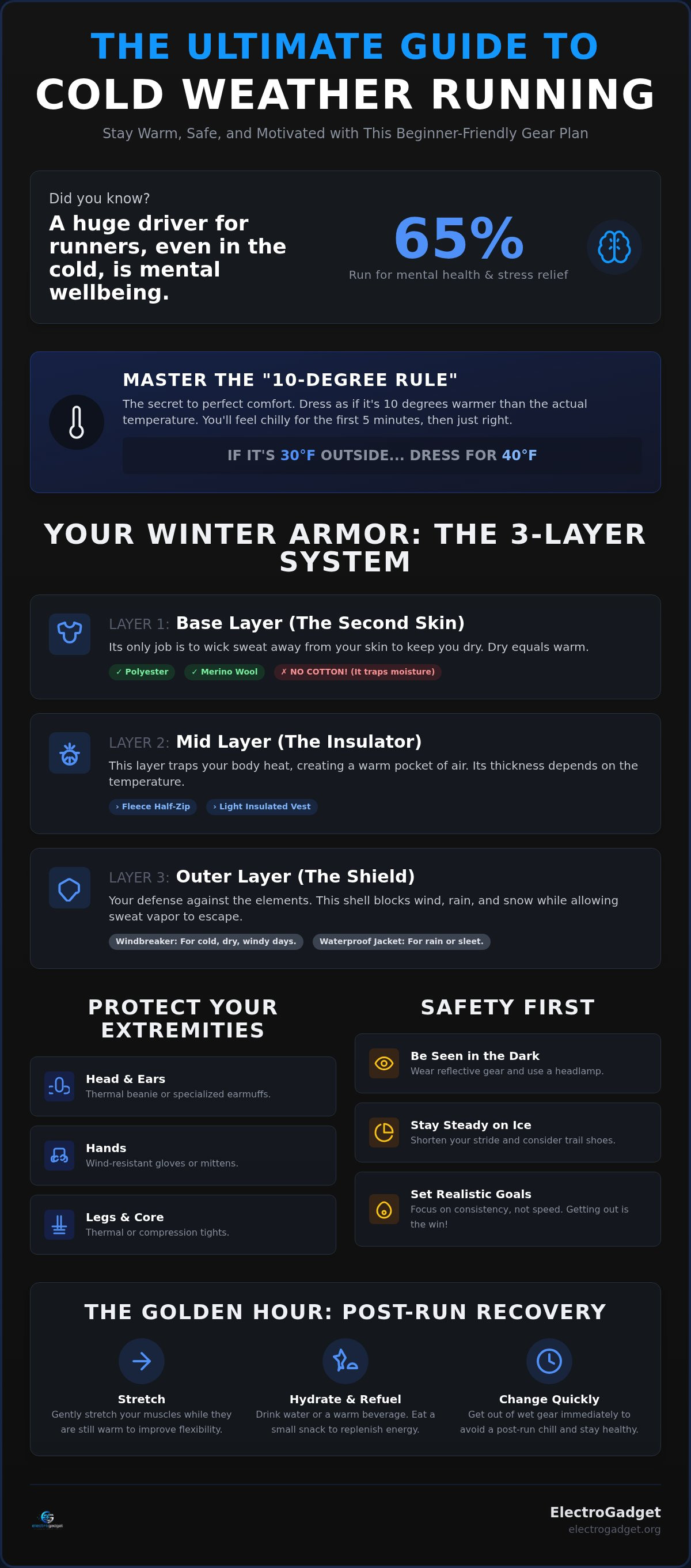
Have you heard of the '10-degree rule'? It's the secret to never feeling like a human popsicle or a melting snowman. You should dress like it's 10 degrees warmer than the thermometer actually says. If it's 30°F outside, dress like you're going for a walk at 40°F. You might feel a little chilly for the first five minutes, but once your heart starts pumping, you'll feel just right!
Winter miles often feel like 'double miles.' Your body works harder to maintain its core temperature, giving your cardiovascular system a fantastic boost. Your heart pumps more efficiently, and your endurance grows faster than it does in the summer heat. Plus, the fresh air is a total game-changer for those 'gray day' blues. A consistent outdoor routine keeps your mood high and your energy levels soaring even when the sun is hiding. It's the perfect way to soak up every bit of natural light available!
The Science of Staying Warm (Without Melting)
Your body is a natural furnace. When you jog, you generate heat through thermoregulation. The trick is keeping that heat close without getting soaked in sweat. This is where The Simple 3-Layer System becomes your best friend. Whatever you do, stay away from cotton! Cotton soaks up moisture and stays wet. Wicking is the vital process of moving sweat away from your skin to the outer layers of your clothes.
Setting Your Winter Running Goals
Forget about hitting personal records right now. In the winter, consistency is your biggest win! Focus on just getting out the door three times a week. Gamify your runs by using local landmarks like the neighborhood's brightest holiday lights. To make things easy, keep your cold weather running gear for beginners ready in a travel toiletry bag organizer. It keeps essentials like lip balm and safety lights in one tidy spot!
The Simple 3-Layer System for Every Beginner
Building your winter running wardrobe doesn't require a second mortgage! You don't need to drop $500 on a single outfit to stay safe and comfortable. By mastering three simple layers, you can create a versatile kit that handles everything the 2026 season throws your way. It's all about strategic stacking. This approach is the gold standard for cold weather running gear for beginners who want to stay cozy without breaking the bank.
The system is easy to remember. Each layer has a specific mission to keep you moving:
- Base Layer: This is your 'Second Skin' that moves moisture away from your body.
- Mid Layer: This is your 'Insulator' that traps your natural body heat.
- Outer Layer: This is your 'Shield' against wind, rain, and unexpected snow.
You can mix and match these based on your local forecast. If the sun is out but it's brisk, you might only need a base and a light shell. On those truly freezing mornings, you'll want all three to stay protected!
Choosing Your Base and Mid Layers
When you're checking labels, look for synthetics like polyester or natural Merino wool. Both are fantastic at wicking moisture. A simple fleece half-zip is often a beginner's best friend because it's affordable, durable, and breathes incredibly well. Don't forget your legs! Compression tights are excellent for keeping your muscles warm and stable during those frosty morning jogs. They provide a snug fit that prevents cold air from sneaking in while you find your rhythm.
The Outer Shell: Wind vs. Waterproof
Choosing the right shell depends on the sky. If it's just cold and breezy, a lightweight windbreaker is usually enough. You only need a heavy, waterproof jacket if it's actually raining or sleeting. Always look for 'breathable' vents under the arms or on the back. These prevent the dreaded 'trash bag' effect where you end up soaked in your own sweat! Remember that wind-chill is often a much bigger threat to your comfort than the actual temperature on the thermometer. Proper shielding helps you avoid the dangers of hypothermia and frostbite while you're out exploring. Having the right cold weather running gear for beginners makes every mile feel like a victory!
Staying warm starts with smart choices. If you're looking for ways to keep your tech ready for those long winter miles, check out these helpful lifestyle accessories to power your routine. It's all about making your winter runs as stress-free as possible!
Essential Accessories: Protecting Your Extremities
When the temperature drops, your body becomes a bit selfish! It pulls heat away from your fingers, toes, and ears to keep your vital organs toasty and safe. This is why your extremities are the first things to feel the bite during a winter jog. To stay happy on the trail, you need the right cold weather running gear for beginners to seal in that warmth. Don't let a numb nose or frozen fingers cut your workout short! 🧤
One of the best secrets for 2026 is the neck gaiter, or 'Buff.' It is easily the most versatile accessory you will ever own. You can wear it as a scarf, pull it over your face to warm the air you breathe, or even twist it into a headband. For your hands, the choice between gloves and mittens depends on the intensity of the chill. Mittens are generally warmer because your fingers share heat, while gloves give you the dexterity to check your watch. According to NYRR's cold weather running guide, protecting these areas is just as important as your base layers for a safe and successful run.
Head and Ear Protection
Standard beanies are okay, but they often let the wind whistle right through the fabric. That is where the magic of black ice gel earmuffs comes in! These earmuffs use a specialized gel lining to create a custom seal against biting winds. They provide incredible temperature regulation and sub-zero wind protection without the itchiness of wool. If you're doing a high-intensity run, a headband is often better than a full hat because it lets heat escape from the top of your head. Also, remember your skin! Winter sun and wind can be harsh, so always swipe on some winter-specific lip balm and sunscreen before you head out. ❄️
Keeping Your Feet Dry and Happy
Your toes deserve some love too! The 'Wool Sock' secret is a total game-changer for winter comfort. Unlike cotton, wool keeps your feet warm even if they get wet from a stray puddle or melting slush. You don't necessarily need expensive winter-specific shoes as a beginner. Your regular road shoes work just fine on salt and slush! If you're worried about grip, consider these simple tips:
- Socks are key: Look for merino wool blends to prevent blisters and chill.
- DIY Traction: Add small hex screws to the soles of old shoes for instant grip on ice.
- Dry them out: Stuff wet shoes with newspaper after your run to soak up moisture fast.
This simple approach to cold weather running gear for beginners ensures you stay upright and confident on every icy path!
Safety First: Running in the Dark and Ice
Safety isn't just a checklist; it's your ticket to a stress-free winter season! When the sun dips low and the sidewalks get crunchy, a little preparation goes a long way. The biggest challenge for any new runner is the combination of limited daylight and unpredictable surfaces. By building a solid safety routine, you can focus on the joy of movement rather than worrying about a slip or a trip. Let's make sure your cold weather running gear for beginners includes the right tools to keep you shining bright! 🌟
Step one is all about visibility. In 2026, reflective gear has become incredibly stylish and effective. Look for vests or jackets with 360-degree reflectivity so drivers can see you from every angle. Step two is lighting your path. A lightweight headlamp is essential for spotting those sneaky frozen puddles. It gives you the confidence to maintain your pace even on the darkest mornings. If you do encounter a slippery patch, remember to shorten your stride. Keeping your feet directly under your hips helps you maintain balance and prevents those heart-stopping slides!
Tech Readiness for Cold Runs
Did you know that freezing temperatures can drain your phone battery in record time? Lithium-ion batteries struggle in the frost, which can be a real problem if you need to call for a ride. Before you lace up, make sure your tech is topped off. Keeping your devices ready with a 3 in 1 foldable wireless charger before you head out is the best way to ensure your phone and watch stay powered through the chill. You should also explore safety apps that offer live tracking. Sharing your route with a loved one adds an extra layer of security to every mile you crush! 📱
Route Planning for Winter
Your route choice matters just as much as your shoes! When you are testing out new cold weather running gear for beginners, stick to 'out and back' paths rather than large, isolated loops. This keeps you closer to home or your car if the weather takes a sudden turn. Be extra cautious in 'black ice' zones, like shaded areas or spots near water runoff, where ice lingers long after the sun comes out. Finally, always tell someone your expected return time. It is a simple habit that ensures help is never far away if you need it. Ready to gear up for your next adventure? Grab your essential safety accessories and get out there with total confidence!
The Reward: Post-Run Recovery and Warm-Up
You did it! You crushed those frosty miles and conquered the chill. The secret to loving your new hobby long-term is what happens once you step back inside. The "Golden Hour" is your most important recovery window. As soon as you stop moving, your body temperature begins to drop rapidly. Since you are likely a bit damp from sweat, staying in those clothes is a recipe for a deep, uncomfortable chill. Change into dry, cozy loungewear immediately to keep your muscles happy and your spirits high! ☕
Don't forget that hydration is just as vital in January as it is in July. Cold air is incredibly dry. You lose a surprising amount of moisture just through your breath during a winter jog. Keep a water bottle handy and sip consistently even if you don't feel thirsty. Part of your cold weather running gear for beginners strategy should include a post-run ritual that feels like a total treat. Setting up your nightstand for the ultimate 'runner's rest' ensures you wake up refreshed and ready for your next adventure!
Soothing Your Senses
Your brain needs a break just as much as your legs do! After a tough mile in the wind, your nervous system might feel a little overstimulated. This is the perfect time for active recovery. Spend five minutes doing gentle, warm stretches while your muscles are still pliable. To truly decompress, try using a 3D eye mask bluetooth music device. It blocks out the winter gloom and lets you drift away to your favorite calming tracks. Using high-quality stereo sound is a fantastic way to promote mental recovery and lower stress levels after a high-intensity outdoor workout. 🎧
Gear Maintenance for Longevity
Your cold weather running gear for beginners will last much longer if you treat it with a little love. When you get home with wet shoes, never ever put them on a radiator! High heat can ruin the specialized foam and melt the glue. Instead, stuff them with recycled newspaper to soak up the moisture naturally. When it is time to wash your technical fabrics, remember the 'no dryer' rule. Hang them up to air dry so they maintain their wicking powers for years to come. To ensure you are always prepared for the next session, keep your recovery gadgets powered up with a mobile charger 3 in 1. It is the perfect way to keep your phone and music mask ready for action! 🔋
Ready to Own the Winter Road? ❄️
You are officially ready to turn those "gray days" into your personal victory laps! By mastering the simple three-layer system and prioritizing your safety in the dark, you've transformed winter from a barrier into a playground. Remember that protecting your extremities and nailing your post-run recovery are the real secrets to beginner success. Finding the right cold weather running gear for beginners is the smartest way to ensure you stay consistent, healthy, and happy all season long.
Don't wait for the first blizzard to realize you need better protection. From our innovative gel-tech earmuffs that block sub-zero winds to a curated selection of recovery gadgets, we have everything you need to succeed. With fast worldwide shipping for your 2026 winter goals, your new routine starts the moment your package arrives! Gear up for your first winter run with ElectroGadget's lifestyle essentials!
Lace up those shoes and step outside with confidence. You've got the gear, the plan, and the drive to crush every icy mile. We can't wait to see you out there making 2026 your best running year yet! 🏃♂️✨
Your Winter Running Questions Answered! ❄️
Is it safe to run in 20-degree weather as a beginner?
Yes, it is perfectly safe as long as you have the right layers! Most beginners find that their body heat keeps them quite comfortable once they get moving. Focus on covering all exposed skin and warming up slowly indoors before you step outside. Just keep an eye out for icy patches and listen to your body if you feel a deep, persistent chill.
What is the best fabric for winter running clothes?
Synthetic blends like polyester or natural Merino wool are your absolute best bets. These fabrics are designed to pull sweat away from your skin so you don't get clammy and cold. Avoid cotton at all costs because it stays wet and will make you freeze! Finding the right cold weather running gear for beginners starts with checking those clothing labels for high-performance materials.
How do I stop my nose from running while I'm running?
A runny nose is just your body's way of warming up the cold, dry air! You can manage it by pulling a neck gaiter or "Buff" over your face to pre-warm the air you breathe. This simple trick reduces irritation in your nasal passages. Stashing a few soft tissues in your pocket is also a smart beginner move for those chilly miles!
Do I need special winter running shoes for the road?
You don't need special winter shoes for standard road running on plowed or salted surfaces. Your regular road shoes provide plenty of traction for most neighborhood routes. If things get a bit slushy, just wear Merino wool socks to keep your toes toasty even if they get a little damp. Save the expensive trail spikes for deep woods or extreme ice!
How many layers should I wear for a 30-degree run?
A two-layer system is usually the "sweet spot" for 30-degree weather. Start with a long-sleeve wicking base layer and add a light windbreaker or a fleece vest on top. This combo keeps your core warm without causing you to overheat halfway through your workout. Always remember the 10-degree rule; you want to dress like it is 40 degrees outside!
What should I do if my ears hurt from the cold wind?
Protect your ears immediately with specialized gear like Black Ice Gel earmuffs to block the biting wind. These are a non-negotiable for ear health because they regulate temperature and provide a custom seal. If you don't have earmuffs, a thick fleece headband can also work. Never ignore ear pain; your ears are very sensitive to the wind and need that extra shield!
Can running in the cold damage my lungs?
Running in the cold won't damage healthy lungs, even if the air feels "sharp" at first. Your body is incredibly efficient at warming air before it hits your lungs. If the dry air feels uncomfortable, simply wear a gaiter over your mouth to add moisture and warmth to every breath. It makes the whole experience much more pleasant for new runners!
How do I keep my phone battery from dying in the cold?
Keep your phone tucked in an internal pocket close to your body to use your natural heat. Cold weather drains lithium-ion batteries quickly, so always start your run with a full charge. Using a 3 in 1 foldable wireless charger to top off your cold weather running gear for beginners ensures you have plenty of power for music, tracking, and emergency calls!